
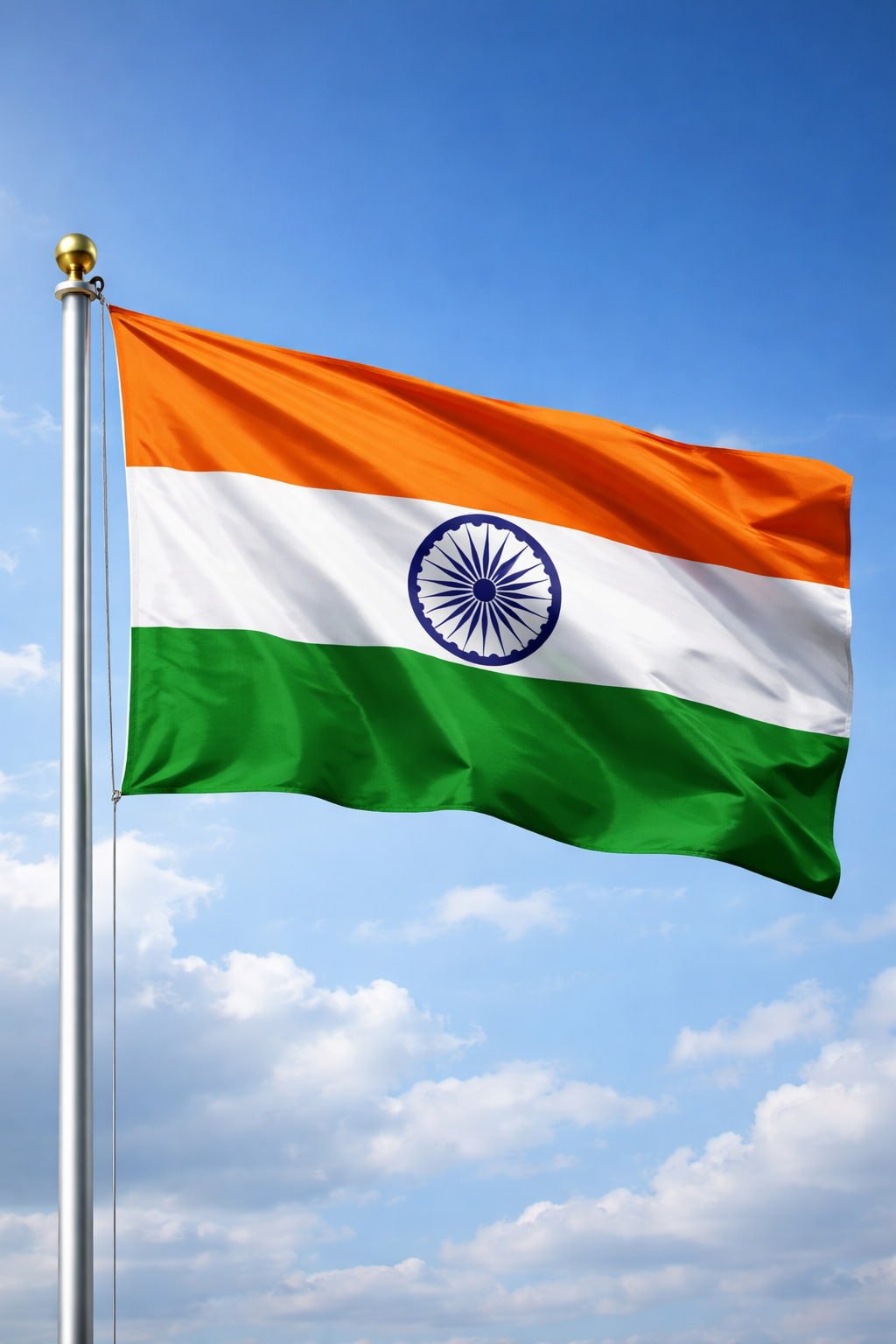
Tiranga Jhanda – The Pride of India 🇮🇳
The Tiranga Jhanda, also known as the Indian National Flag, is the most powerful symbol of India’s unity, freedom, and national pride. It represents the values, sacrifices, and hopes of more than a billion Indians.
Designed with deep meaning and respect, the Tiranga inspires patriotism and reminds us of our duty towards the nation.
Meaning of the Tiranga Colors
The Indian National Flag consists of three horizontal colors and the Ashoka Chakra in the center:
🟧 Saffron (Top)
Symbolizes courage, sacrifice, and strength. It represents the spirit of selfless service and bravery of the nation.
⚪ White (Middle)
Represents peace, truth, and honesty. It reminds us to walk the path of righteousness.
🟩 Green (Bottom)
Stands for growth, prosperity, and harmony with nature, reflecting India’s agricultural strength and hope.
🔵 Ashoka Chakra
The 24-spoked Ashoka Chakra signifies law, justice, and continuous progress. It reminds citizens to keep moving forward with discipline and integrity.
Importance of the Tiranga Jhanda
The Tiranga Jhanda is not just a flag; it is the soul of India. It is proudly hoisted on:
Independence Day
Republic Day
National Events & Ceremonies
Schools, Offices, and Government Buildings
Every Indian feels deep respect and emotion when the Tiranga waves high in the sky.
Tiranga Jhanda Respect Guidelines
As per the Flag Code of India, the Tiranga must always be:
Treated with honor and dignity
Hoisted correctly and never allowed to touch the ground
Used respectfully without distortion or misuse
Respecting the Tiranga means respecting the nation.
Our Commitment to the Tiranga
We believe in promoting national pride, awareness, and respect for the Tiranga Jhanda. Through responsible use, education, and celebration, we aim to keep the spirit of India alive in every heart.
🇮🇳 “The Tiranga is not just a flag; it is our identity, our pride, and our responsibility.” 🇮🇳
Tiranga Jhanda – The Eternal Symbol of India
The Tiranga Jhanda, officially known as the Indian National Flag, is the supreme symbol of India’s independence, unity, and democratic values. It reflects the soul of the nation and stands as a reminder of the sacrifices made by countless freedom fighters to secure our liberty.
Every time the Tiranga rises high, it fills the hearts of Indians with pride, respect, and a deep sense of responsibility toward the country.
History of the Tiranga Jhanda
The present design of the Tiranga Jhanda was adopted on 22 July 1947, shortly before India gained independence. The flag was inspired by the ideals of truth, peace, and righteousness, values deeply rooted in Indian culture and heritage.
The Ashoka Chakra is derived from the Lion Capital of Ashoka at Sarnath, symbolizing justice, moral discipline, and progress.
Structure and Design of the Indian National Flag
The Tiranga Jhanda consists of:
Three equal horizontal bands
Ratio of 3:2 (length to width)
Ashoka Chakra in navy blue at the center
Every element of the flag has a defined meaning and must be displayed with precision and respect.
Symbolic Meaning of the Colors
🟧 Saffron – Courage and Sacrifice
The saffron color represents bravery, renunciation, and the spirit of selfless service. It reminds citizens to place the nation above personal interest.
⚪ White – Peace and Truth
White signifies honesty, purity, and peace. It reflects the moral values that guide India’s democratic principles.
🟩 Green – Growth and Prosperity
Green symbolizes fertility, growth, and hope. It highlights India’s connection with nature and agricultural heritage.
Ashoka Chakra – The Wheel of Progress
The Ashoka Chakra, with its 24 spokes, represents continuous movement, justice, and law. It teaches that stagnation leads to decline, while constant progress leads to national development.
The Chakra inspires citizens to work hard, remain disciplined, and contribute positively to society.
National Importance of the Tiranga Jhanda
The Tiranga Jhanda is proudly hoisted and displayed on:
Independence Day (15 August)
Republic Day (26 January)
National functions and ceremonies
Government offices and institutions
International events representing India
It unites people beyond religion, language, caste, and region.
Respect and Flag Code of India
The Flag Code of India lays down guidelines to ensure the Tiranga is always treated with honor. Some key principles include:
The flag must never touch the ground or water
It should not be used as clothing, decoration, or drapery
Damaged or worn-out flags must be disposed of respectfully
The Tiranga must always be displayed in its correct form
Respecting the flag means respecting the Constitution and the nation.
Emotional Connection with the Tiranga
For Indians, the Tiranga Jhanda is not just fabric — it is emotion, history, and identity. It represents:
Freedom earned through sacrifice
Unity in diversity
Hope for a stronger future
From schoolchildren to soldiers, the Tiranga connects every Indian heart.
Our Vision and Responsibility
We are committed to spreading awareness about the Tiranga Jhanda and encouraging every citizen to uphold its dignity. By understanding its meaning and following the Flag Code, we ensure that the pride of India remains high forever.
🇮🇳 “The Tiranga flies high when the nation stands united.” 🇮🇳